




 Canada (EN)
 Global (EN)



Combining public health surveillance with real-world clinical data to anticipate healthcare demand and strengthen preparedness.
Key takeaways
-
An early start to the 2026–27 flu season: Canada's flu season began in early October this year, but an early start does not necessarily mean an early peak.
-
A close link between flu activity and care demand: over 4 flu seasons, the number of consultations for respiratory symptoms at Dialogue peaked within 1 to 2 weeks of the national influenza peak.
-
A December peak is most likely this year: consultations for respiratory symptoms at Dialogue are already 32% higher than off-season levels this fall and could reach nearly 2X their usual volume by December.
-
An opportunity to prepare: combining public health surveillance with clinical data helps predict when respiratory illnesses are likely to peak, allowing healthcare teams to prepare for increased demand and helping people make informed decisions about prevention and when to seek care.
What we're seeing
In Canada, flu season typically begins in mid-to-late November, with activity increasing as winter approaches. But this year, the 2026–27 season got an early start, with influenza activity emerging in early October, 5 weeks ahead of the usual timeline. An earlier start doesn't necessarily mean an earlier peak, but it does mean respiratory viruses are already circulating as we head into the colder months.
By October 24, 7.6% of influenza tests conducted nationally were positive, according to the Public Health Agency of Canada (PHAC) [1], up from 6.2% the previous week, suggesting that influenza activity is increasing across Canada. The positivity rate has also surpassed the 5% threshold used by PHAC to signal the start of the influenza epidemic period. However, this does not mean activity has peaked. Positivity rates can continue to climb throughout the season, reaching 20–30% or higher during particularly active flu seasons.
Influenza isn't the only virus circulating this fall. COVID-19 activity continues across the country, while respiratory syncytial virus (RSV) activity remains low. With multiple viruses circulating, illness and demand for care can increase as we move further into the respiratory virus season.
These early signals create an opportunity to anticipate healthcare demand and prepare for a surge, rather than react once it happens.
From surveillance to prediction
Public health surveillance tracks how viruses circulate across the population. Clinical data, such as respiratory-related consultation volumes and reasons for seeking care, offer a closer look at how these trends affect people, showing when more individuals become sick enough to seek medical attention and how this translates into healthcare demand.
At Dialogue, we analyzed our consultation requests related to respiratory symptoms across Canada over 4 flu seasons, from 2022 to 2026, and compared them with national influenza surveillance data. The trends followed very similar patterns in 3 of the 4 seasons analyzed, with strong correlations (0.87–0.95, where 1.0 represents a perfect positive correlation). The correlation was weaker only in 2024–25 (0.65), a season in which RSV played a greater role in respiratory care demand [2].
Our data also revealed a strong link between influenza activity and consultation volumes. Across all 4 flu seasons, consultations for respiratory symptoms (such as fever, cough, sore throat, sinus pain, and nasal congestion) reached their maximum volume within 1 to 2 weeks of the national influenza peak. During this period, consultation volumes were 80% to 135% above off-season levels (see Figure 1).
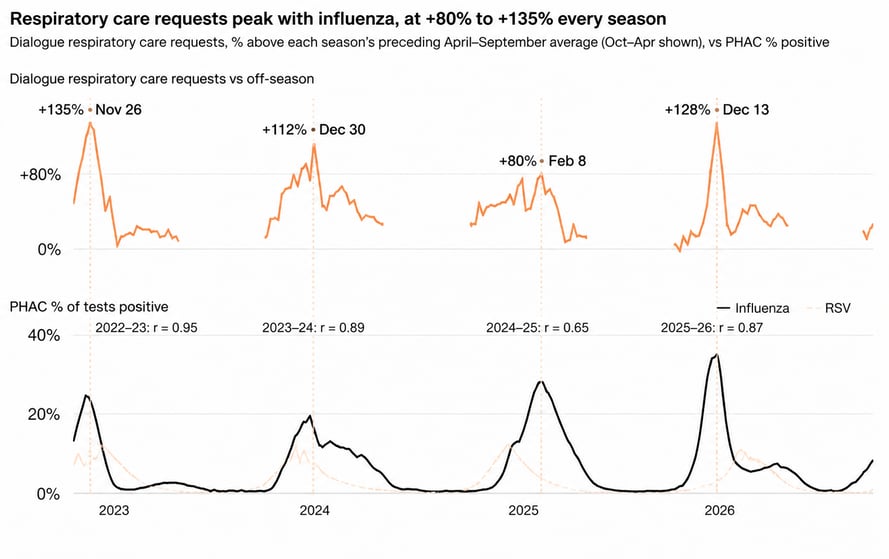
FIGURE 1: Dialogue respiratory demand and national influenza activity, 2022–2026
This analysis draws on Dialogue’s experience delivering more than 2 million clinical consultations across Canada during this period. While not every respiratory concern is influenza-related, and our data does not independently predict viral transmission, these patterns complement public health surveillance and help us anticipate changes in healthcare demand.
What we anticipate this winter
By late October this year, Dialogue's respiratory care demand was already 32% above its off-season average and 19% higher per member than at the same time last year [3].
Based on previous flu seasons and what we're seeing so far this year, we expect respiratory care demand to be highest in early to mid-December, at roughly 2X its usual level. However, the busiest period could fall anywhere from late November through February (see Figure 2).
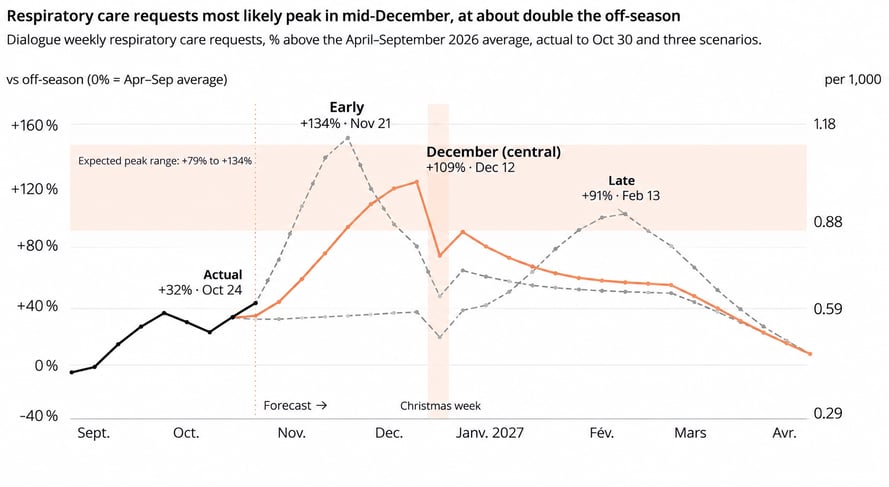
FIGURE 2: Observed respiratory demand and three forecast scenarios for 2026–27
These projections will be refined as new data becomes available, particularly as influenza transmission and other respiratory viruses influence the timing and scale of demand for care.
In healthcare, the value of forecasting lies in anticipating demand early enough to prepare for the needs of the population and ensure people can access the right care when they need it.
A healthcare system already under pressure
This year's respiratory season is arriving at a time when parts of Canada's healthcare system are already facing significant capacity challenges. For example, in late October, several of Quebec’s emergency departments were operating at more than 120% stretcher occupancy, ahead of the anticipated influenza peak [4].
Respiratory infections increase emergency visits and hospital admissions, but overcrowding also reflects hospital bed shortages and patient-flow constraints. When capacity is already stretched, even moderate increases in illness can add pressure.
According to the Canadian Institute for Health Information (CIHI), approximately 9% of Canadian emergency department visits in 2023–24 involved conditions potentially manageable through virtual primary care [5]. This does not mean that all these visits were avoidable or that emergency care was unnecessary. However, it points to an opportunity for earlier assessment and support outside the hospital, helping some patients access a more appropriate level of care.
Virtual care alone cannot solve hospital overcrowding, but well-designed clinical triage can help patients manage suitable conditions remotely, assess symptom urgency, and determine when and where to seek in-person care, while providing practical home care advice in the interim. It also helps connect patients with the right healthcare professional or service based on their clinical needs.
Turning clinical intelligence into action
At Dialogue, our clinical and operations teams review public health surveillance alongside internal consultation patterns every week. These insights inform capacity planning, regional staffing, and communications with our clients and our members.
But preparation is not simply about adding consultations. It is about providing the right care, from the right professional, at the right time.
Our virtual primary care model always starts with a smart triage with human clinical oversight. Designed and validated by our clinicians specifically for virtual care triage, it uses structured pathways to identify concerns that can be managed virtually and those requiring further assessment or in-person care.
Registered nurses provide additional support when needed. They contact all patients directed to emergency care and are available to guide those directed to in-person assessment. These pathways account for approximately 7% and 20% of total presentations, respectively [6]. Nurses also conduct consultations within their scope of practice, including home care advice and symptom management.
For patients who proceed to a consultation with a physician or nurse practitioner, more than 98% do not require subsequent referral to in-person care, reflecting our ability to manage a broad range of primary care concerns virtually when clinically appropriate. Approximately 80% of patients consulting for the 6 most common primary care concerns report symptom resolution within 7 days [7]. These outcomes reflect a care model supported by robust clinical triage, matching patients to the most appropriate level of care while making effective use of healthcare resources.
For the employers and organizations we work with, preparedness also means supporting prevention and timely access to care. This includes encouraging vaccination, supporting employees who stay home when sick, and making reliable self-care information and timely clinical assessment accessible, particularly for people at higher risk of influenza complications.
From reacting to anticipating
The flu season highlights a broader opportunity in healthcare: using data not only to understand what is happening, but to anticipate future needs. Public health surveillance tracks when and where viruses are circulating, while real-world clinical data shows how those trends translate into increased illness, care-seeking behaviour, and demand for services.
No forecast will predict every peak in viral activity precisely. But together, these insights can help us prepare earlier, plan clinical capacity and staffing, and ensure patients have access to timely, appropriate care.
Ultimately, better anticipation means a healthcare system ready to support patients and respond to what comes next.
Sources
- Public Health Agency of Canada (PHAC). Canadian Respiratory Virus Surveillance Report: FluWatch+. October 30, 2026. Government of Canada. https://health-infobase.canada.ca/respiratory-virus-surveillance/
- Dialogue. Aggregated, de-identified respiratory and ear, nose, and throat care requests, 2022–2026. Historical comparisons use each season's April–September reference period (April–September 2023 for the 2022–23 season).
- Dialogue. Respiratory Care Demand and Seasonal Trends, 2025–2026. Internal clinical activity and utilization analysis, October 2026. Unpublished data.
- Urgences Québec. Emergency room occupancy by region. https://urgencesquebec.com/en/regional-trends
- Canadian Institute for Health Information (CIHI). Virtual Primary Care: Impacts and Opportunities. December 2, 2025. https://www.cihi.ca/en/primary-and-virtual-care-access-emergency-department-visits-for-primary-care-conditions/virtual-primary-care-impacts-and-opportunities.
- Dialogue. Primary Care Triage and Disposition Data. Internal clinical services reporting, 2026. Unpublished data.
- Dialogue. Primary Care Patient-Reported Outcomes Measures: Seven-Day Symptom Resolution. Internal clinical outcomes reporting, 2026. Unpublished data.
About Dialogue
Dialogue is Canada’s leading virtual healthcare and wellness provider, offering timely, on-demand access to quality care. Through its team of in-house health professionals, it serves employers and organizations who prioritize the health and well-being of their employees, members, and their families. Dialogue’s Integrated Health Platform is a one-stop healthcare hub that centralizes all programs in a single, user-friendly application, providing access to services 24 hours per day, 365 days per year from the convenience of a smartphone, computer, or tablet. Dialogue is the first and only virtual care provider to receive Accreditation with Exemplary Standing from Accreditation Canada, a third-party validation of the highest levels of safety, quality, and member experience. In October 2023, Sun Life acquired Dialogue, which now operates as a standalone entity as part of Sun Life Canada. For more information, please visit the Company’s website at www.dialogue.co.
For further information
Katherine Hackett
Specialist, Public Policy and Communications
katherine.hackett@dialogue.co l 819-574-3503