.svg)





 Canada (EN)
 Global (EN)
Behind the benchmark
Conducted in partnership with Leger in spring 2026, this report draws on two parallel national surveys — 1,000 employed Canadians and 200 HR decision-makers — analyzed across age, industry, and region.

This live insider session outlines the cost and scale of undetected chronic conditions in Canada for employers.
Employee well-being is declining in Canada, and 3 barriers are preventing most benefits from reversing the trend.
Need help?
Find advice and answers from the Dialogue team.
%201.png)
1,000 working Canadians and 200 HR leaders just told us what you need to hear about your benefits programs.
From sleep to finances to mental health, employee well-being has dropped across every dimension in 2026, despite widespread access to benefits. What’s driving the disconnect, and what’s it costing organizations?
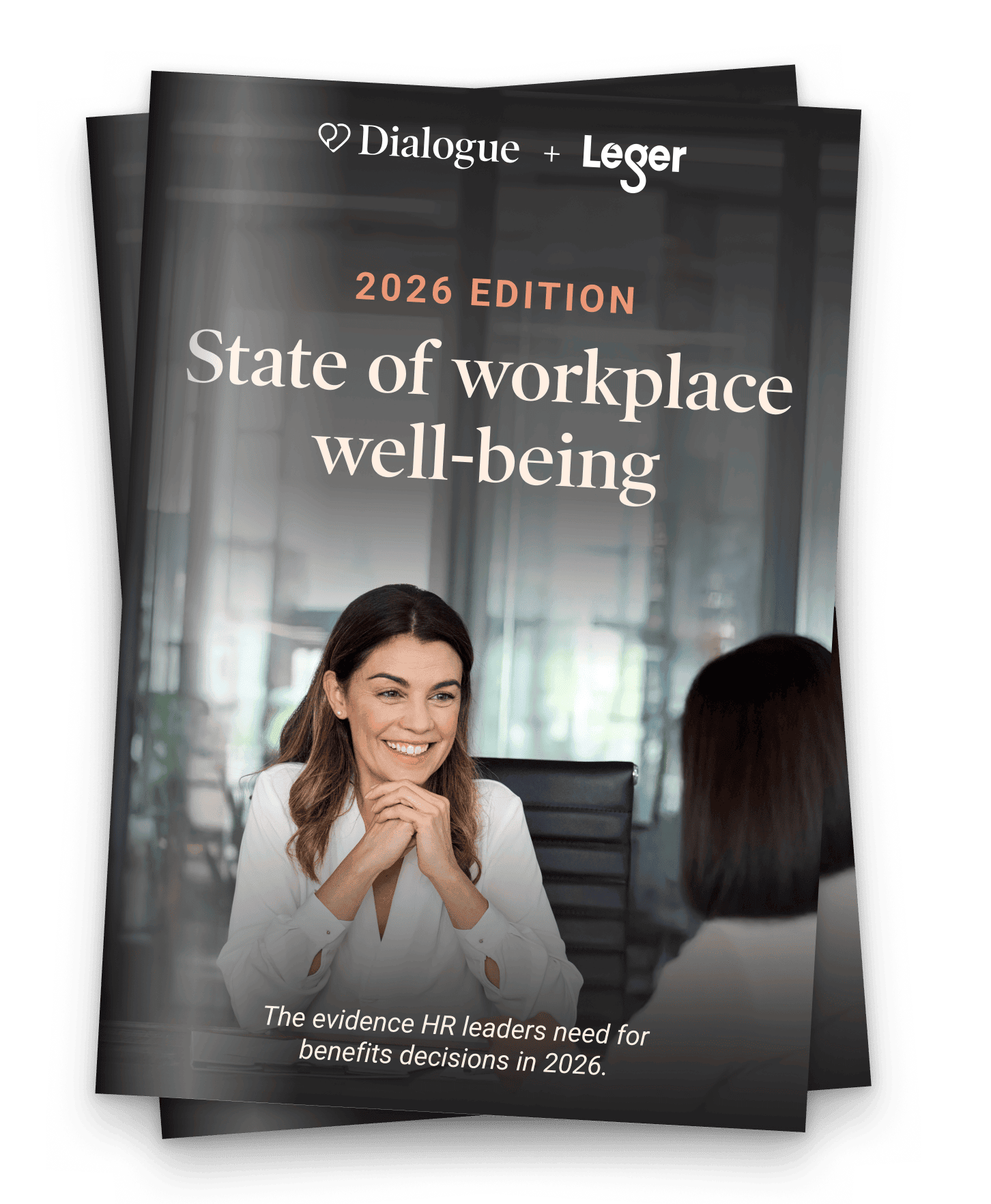
Most employees used their benefits last year. Few were satisfied with the experience. The result is a cycle of lost productivity: absenteeism, presenteeism, burnout. In short, something is getting lost between benefits investment and impact. Dialogue's 2026 state of workplace well-being report uncovers three barriers HR leaders need to tackle now.
Evidence and direction for HR leaders navigating benefits decisions in 2026.
A clear look at how mental, physical, financial, and social health shifted in the past year, and what's actually driving it.
Affordability, ease of access, and short wait times are what employees say make benefits feel effective and engaging, but most plans fail to deliver.
Employees facing friction when trying to access care, coverage that doesn't reflect the pressures workers actually carry, and limited data on program impact.
See how top-performing organizations are raising the benefits bar, and get practical tips for HR leaders rethinking their offerings.

Conducted in partnership with Leger in spring 2026, this report draws on two parallel national surveys — 1,000 employed Canadians and 200 HR decision-makers — analyzed across age, industry, and region.