



 Canada (EN)
 Global (EN)



The 2026–2027 flu season has started earlier than in any recent year, and respiratory illness is already rising among working Canadians. Based on public health data and four seasons of Dialogue's own care data, we expect the busiest period to be between late November and mid-January. Now is the time to act.
What we're seeing
Public health data shows influenza activity rising early this year. PHAC reports the season began in the week ending Oct 10, and 6.1% of flu tests were positive in the week ending Oct 17. Dialogue's own data has tracked national flu activity closely for four seasons, which gives us an early, real-time view of how illness is affecting working Canadians.
Respiratory care requests at Dialogue rise and fall with national flu activity
Dialogue respiratory Index (early September = 100) vs. PHAC % of flu tests positive, 2022-2026
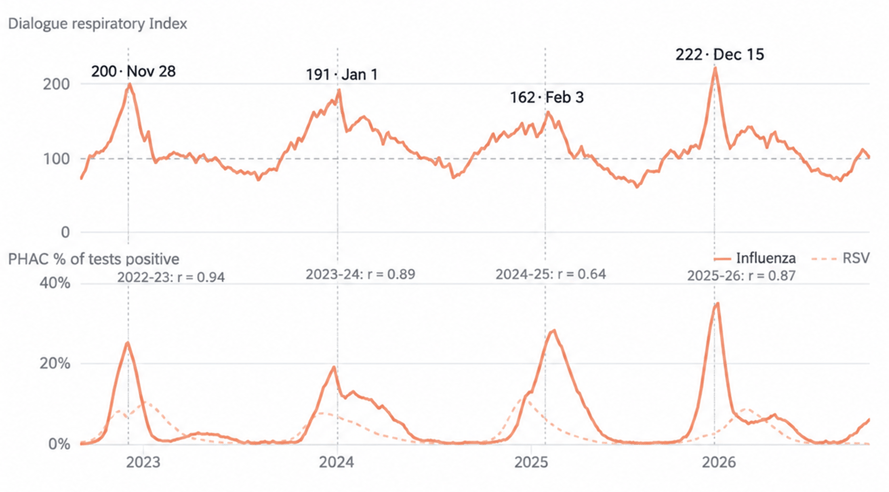
Dialogue respiratory care requests (aggregated, de-identified), indexed to each season's early-September level; PHAC FluWatch+ national % positive. r = within-season correlation with flu.
In three of the last four seasons, the correlation between respiratory care requests at Dialogue and national flu positivity was 0.87–0.94. Our busiest week came within one to two weeks of the national flu peak each time.
What to expect this winter
In past seasons, demand for respiratory care roughly doubled between September and the peak. The peak came within one to two weeks of the national flu peak.
-
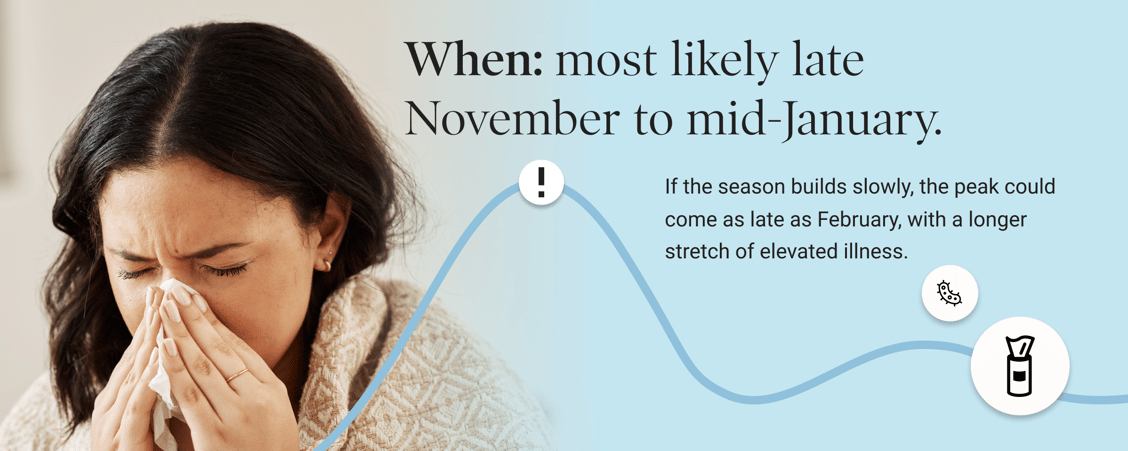
When: most likely late November to mid-January. If the season builds slowly, the peak could come as late as February, with a longer stretch of elevated illness.
-
Holidays: in two of the last four seasons, the national flu peak fell in the week of Christmas. Expect more absences around the holidays and in the first week of January.
-
Across Canada: Western Canada is already seeing higher flu activity. In our data, Ontario has tended to rise first, with Quebec following one to several weeks later.
-
After the peak: a smaller wave of influenza B has kept flu active into March and April in each of the last three seasons, and Respiratory syncytial virus (RSV), which mainly affects young children and older adults, often circulates from December to February.
Three things employers can do now
-
Promote vaccination before the peak. Flu and COVID-19 vaccines take about two weeks to build protection, so early November is the time to remind employees.
-
Make it easy to stay home when sick. Among Canadians tracked by PHAC's FluWatchers program with cough and fever, 76% missed work or school, for 3.5 days on average. Coming in sick spreads illness to colleagues. Encourage flexibility despite in-office policies to prevent spread.
-
Review and adjust your sick-note practices. Several provinces now limit when employers can ask for one for short absences:
-
-
Quebec: not for the first three absences of three days or less in 12 months (since Jan 2025).
-
Ontario: not for the three days of job-protected sick leave under the Employment Standards Act (since Oct 2024).
-
British Columbia: not for the first two health-related absences of five days or less in a year (since Nov 2025).
-
The provincial rules above are a general summary, not legal advice; confirm your obligations with your employment counsel.
How Dialogue is preparing, and how your employees can use us
Our clinical team reviews public health and Dialogue consultation data weekly, and we are adjusting staffing plans for the expected peak, including coverage in both English and French. During the busiest weeks, non-urgent requests may take longer than usual; urgent needs remain prioritized.

Encourage employees to:
-
Start with reliable guidance. Members can soon consult Dialogue's upcoming Respiratory Illness Guide for practical advice on managing common cold and flu symptoms at home, what to expect and when to seek care. Most mild respiratory infections can initially be managed with self-care.
-
Know when to consult. Dialogue's clinical team is available when symptoms worsen, persist or raise concerns. Difficulty breathing, chest pain or confusion may require emergency care.
-
Act early if at higher risk. Older adults, pregnant people and those with chronic conditions should seek timely assessment when influenza is suspected, as antiviral treatments are most effective when started within 48 hours.
We will share updates with you as the season develops.
About the data
-
Dialogue data: weekly new care requests for respiratory and ear, nose and throat concerns across Dialogue's member population in Canada, September 2022 to October 2026. Data is aggregated and de-identified, and shown as an index relative to each season's early-September level.
-
Public health data: Public Health Agency of Canada, Canadian respiratory virus surveillance report (FluWatch+), national percentage of laboratory tests positive for influenza and RSV, updated Oct 23, 2026.
-
Sick-note rules: Blaney McMurtry, Restrictions on employer sick note requests in Canada (Nov 2025).
Outlooks are based on past seasons and are not a guarantee of how this season will unfold.