

 Canada (EN)
 Global (EN)



Artificial intelligence (AI) is helping employees accomplish more in less time. But as organizations embrace greater speed, an important question remains: are productivity gains quietly hurting workplace engagement and well-being? This article shows how organizations should approach AI anxiety at work and provides a toolkit for HR to take action.
Key takeaways
-
AI anxiety is the worry employees feel regarding how technology will alter their tasks, skills, and job security. It is a stress response to change, not a clinical diagnosis.
-
From a psychological perspective, three factors can influence how employees experience AI-driven change: uncertainty about the future, questioning the value of one's professional identity, and a lack of agency over how AI impacts their work.
-
Using AI to maximize productivity often shifts the performance baseline, increasing workload demands without increasing resources (control, support, or recovery time). According to the job demands-resources model and Maslach's research on burnout, this imbalance is a familiar setup for burnout.
-
Left unaddressed, AI anxiety carries direct costs for businesses, from productivity loss to retention issues.
-
HR leaders must tackle AI anxiety as both a change management and mental health issue. Dialogue’s HR toolkit for AI anxiety shares clinical guidance for managing change from Dr. Sandra Primiano.
What is AI anxiety in the workplace?
AI anxiety is the worry and unease employees feel about how AI will change their work: their tasks, their skills, their standing, and their job security. It is a reaction to change, not a clinical diagnosis, and it can range from passing apprehension to sustained distress.
It can show up as worry about the impact of AI, pressure to perform at a higher level, fear or hesitation around using new tools, or pride in expertise turning into defensiveness. Employees can feel it even while performing well and even when they are enthusiastic about what AI can do.
For HR and business leaders, recognizing and addressing AI anxiety matters because it can impact productivity, trust, motivation, and retention.
What drives AI anxiety in employees?
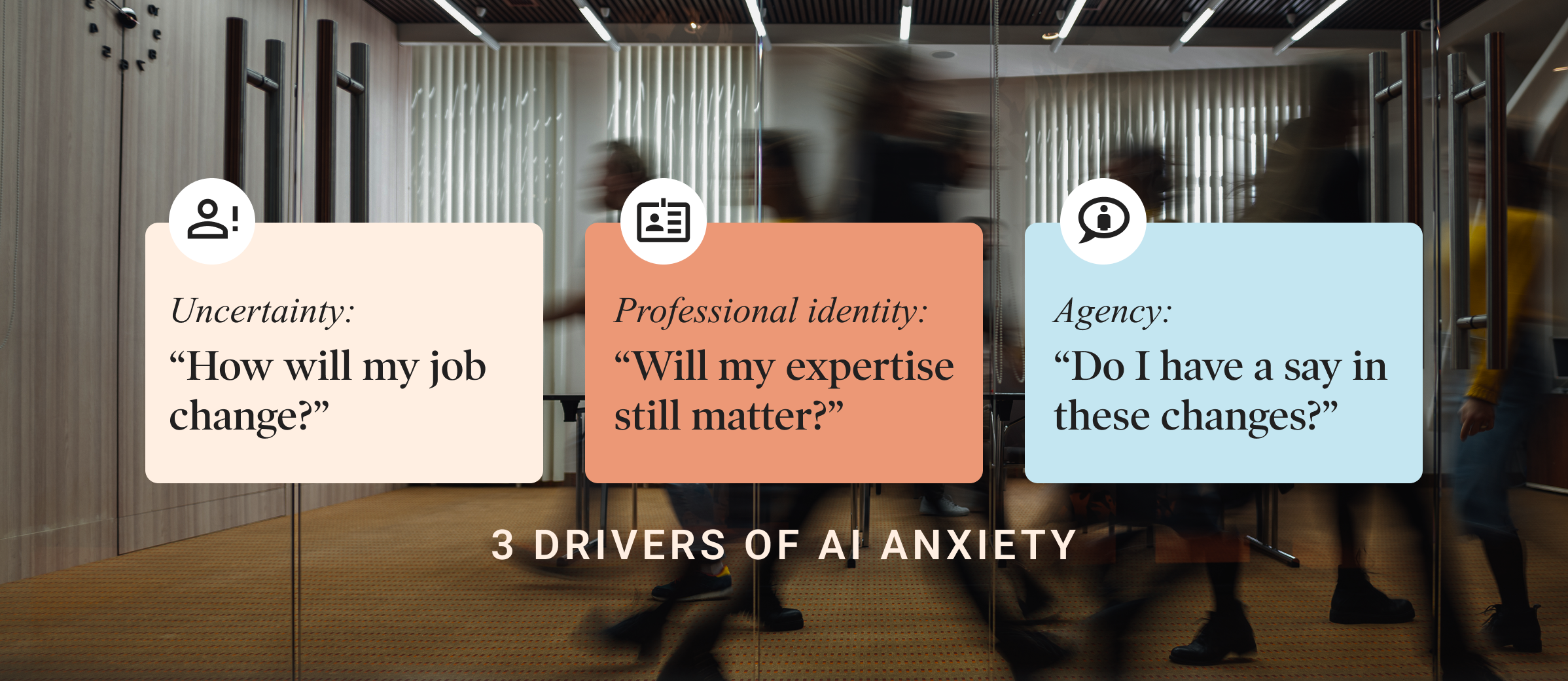
AI anxiety isn't simply resistance to new technology. It can reflect concerns about employees' professional value, future security, and control over their work. From a psychological perspective, three factors can influence how employees experience AI-driven change:
-
Uncertainty: Employees may be unsure how their responsibilities, required skills, or job security will evolve.
-
Identity: Employees may question the value of skills and experience they've spent years developing.
-
Agency: Employees may feel they have little control over how AI tools are introduced or used in their work.
These concerns connect to established research on workplace motivation, which identifies autonomy, competence, and connection with others as important psychological needs. According to KPMG's 2025 Generative AI Adoption Index, 83% of surveyed Canadian employees wanted or needed to improve their AI skills, but only 48% felt their employer provided sufficient training.
How AI anxiety impacts both employees and businesses
Rising workloads
When AI takes a task off an employee's plate, where does the saved time go? Does it fund more meaningful work, or simply raise the baseline for what people are expected to produce? That is a decision HR and business leaders are making, whether they realize it or not.
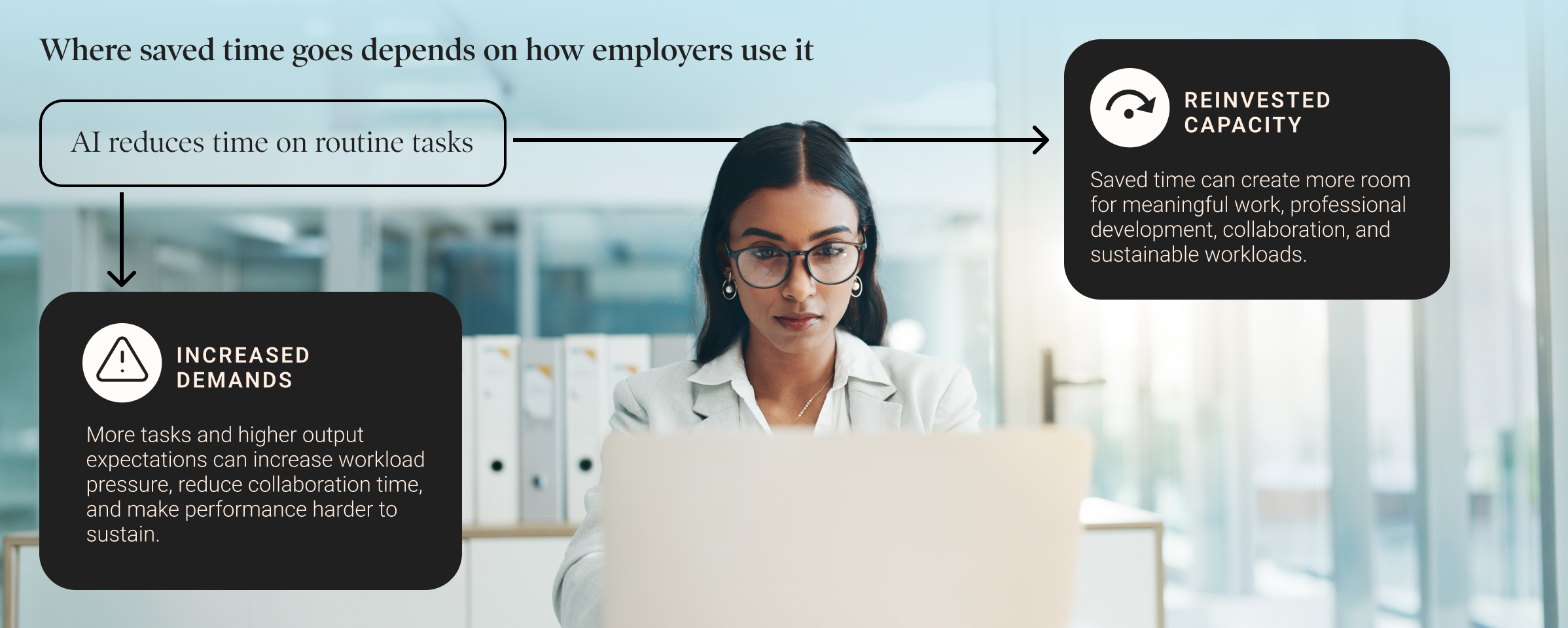
When the time AI saves is absorbed by higher expectations, the “productivity squeeze” can turn into strain. Four psychological mechanisms help explain why AI anxiety can become problematic for employee well-being, engagement, and performance over time:
-
Demands rise without added resources. Productivity gains that increase demands without increasing control, support or recovery time are a familiar route to burnout, a pattern described in the job demands-resources model and in Maslach's burnout research.
-
Verifying AI output is work. Reviewing, checking and correcting AI drafts is its own demand, and the focus on "time saved" can hide it.
-
Recovery disappears. Detaching from work and resting protect against burnout, but if saved time is immediately refilled, that recovery opportunity is lost.
-
Effort and reward fall out of balance. If people produce more while recognition, pay or autonomy stay flat, strain increases even when performance is high.
Employees are already feeling the demands: according to KPMG's 2025 research on AI attitudes, 27% of Canadian respondents reported increased workload or stress and pressure due to AI.
Job insecurity
According to Statistics Canada, nearly 60% of Canadian workers hold jobs that could be affected by AI. But that doesn't necessarily mean job losses. In many cases, AI may complement employees' existing skills rather than replace them.
Still, employers are reconsidering their staffing needs. A 2026 survey from Littler found that 77% of Canadian employers had taken at least one workforce-related action in response to economic pressures over the past year, including paused or reduced hiring (46%), layoffs or reductions in force (35%) and increased use of automation or AI to reduce labour needs (28%).
The psychological costs of AI-related restructuring go beyond the individuals directly impacted by layoffs:
-
Job insecurity is a stressor in its own right. In the research, perceived job insecurity is associated with worse health and well-being, even among people who keep their jobs. Survivor effects are well documented. After restructuring, those who stay often experience guilt, distrust and reduced commitment.
-
The psychological contract matters. Employees hold unwritten expectations about loyalty, development and fairness, and perceived breaches damage trust and engagement.
-
Anticipation can hurt as much as the event. Expecting job loss can be as harmful as experiencing it, and clear communication reduces it.
-
Change fatigue accumulates. AI is landing on top of other recent disruptions, and everyone's capacity for change is finite.
Organizational costs
Left unaddressed, AI anxiety may add up to direct costs for a business.
-
AI anxiety may lead to productivity loss, such as from burnout leaves, presenteeism, and quiet resistance to AI tools.
-
Over time, AI-driven workforce restructuring that targets entry-level and senior roles may create long-term challenges for mentorship, knowledge transfer, professional development, and succession planning.
-
Sustained job insecurity can undermine talent retention, as those who retain their positions may lose trust or question their future with the organization. 46 per cent of Canadian office workers believe AI adoption is designed mainly to benefit companies, not them, according to Randstad's 2026 Workmonitor, a global survey of workplaces that included Canada.
When is AI-related stress normal, and when does it require professional support?
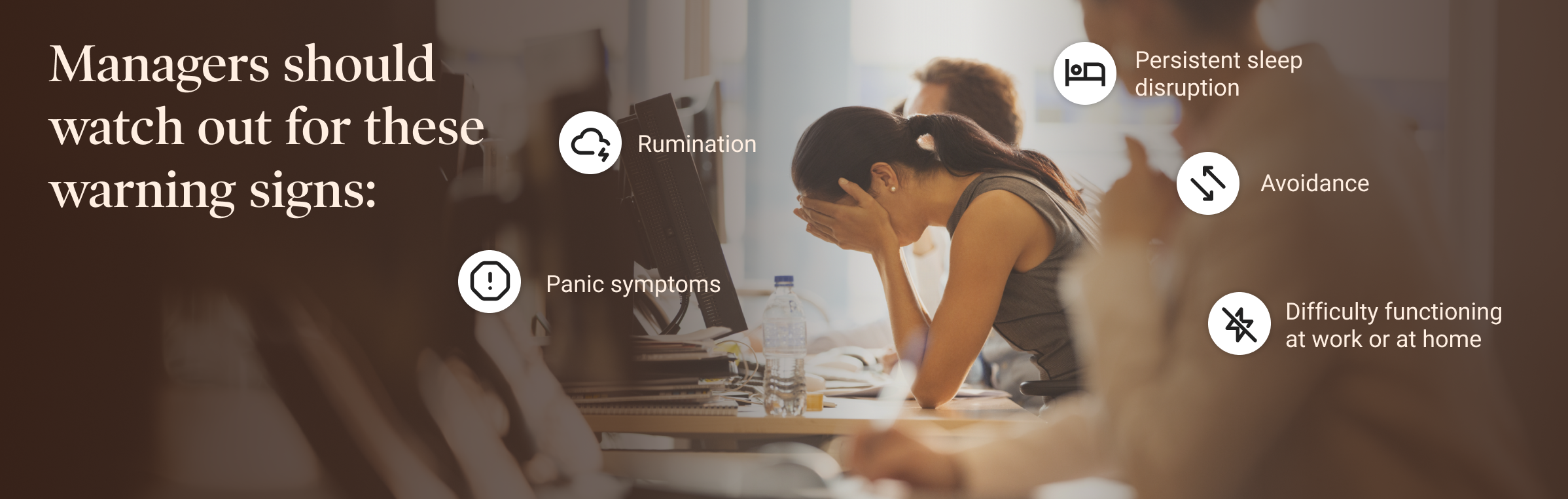
AI anxiety is a stress response to uncertainty about how AI will change work, and not a clinical diagnosis. Most of it is within the normal range and responds to clarity, involvement, and time to learn. However, some signs suggest a person may need professional support:
-
Persistent sleep disruption
-
Rumination
-
Avoidance
-
Panic symptoms
-
Difficulty functioning at work or at home
These signs must typically be present over two weeks or more and represent a change from the employee’s baseline to be concerning.
Remember: Managers are not there to diagnose but to notice early signs of struggle, to have supportive conversations, and when these signs persist, to point employees toward resources such as an Employee and Family Assistance Program (EFAP) or mental health care program.
See how HR leaders can address AI anxiety
To successfully manage AI anxiety, leaders must look beyond efficiencies from AI and focus on the people using it. That means communicating clearly about how AI is changing roles, providing avenues for employee involvement and feedback around AI adoption, investing in employee upskilling and reskilling, and providing access to professional mental health care when normal stress tips into clinical anxiety.
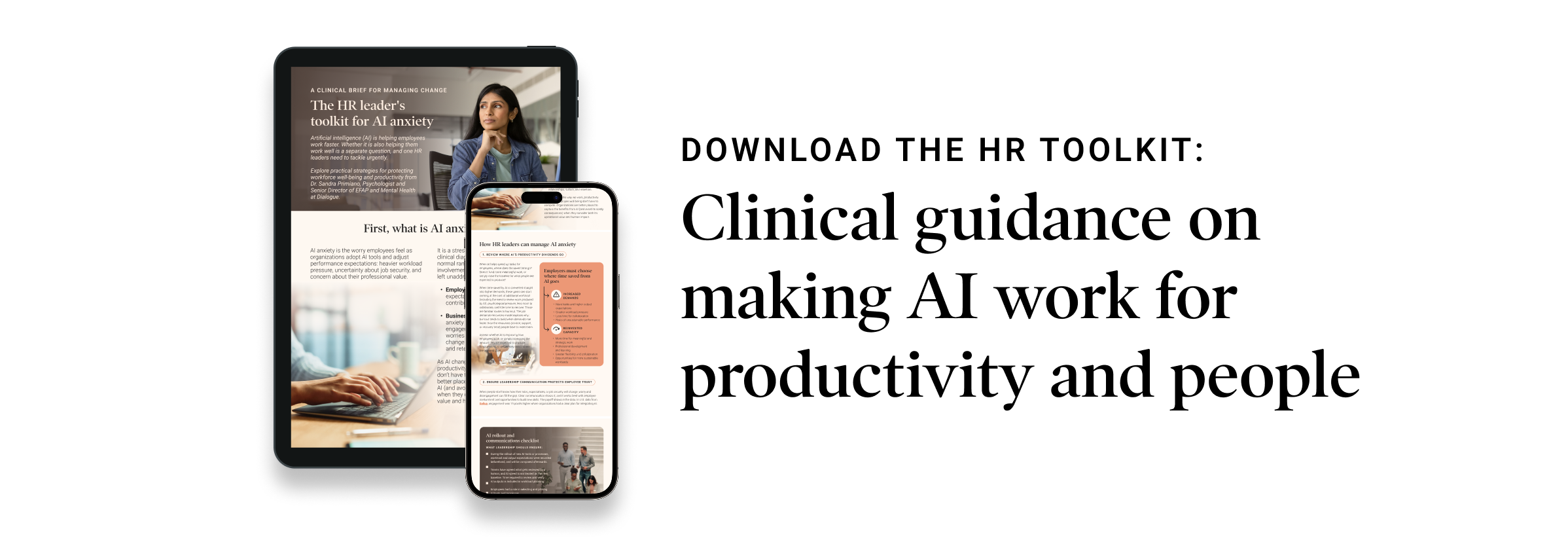
Explore practical strategies in the HR toolkit for AI anxiety, which includes actionable checklists, conversation guides, and templates to help organizations manage and measure AI-driven change.